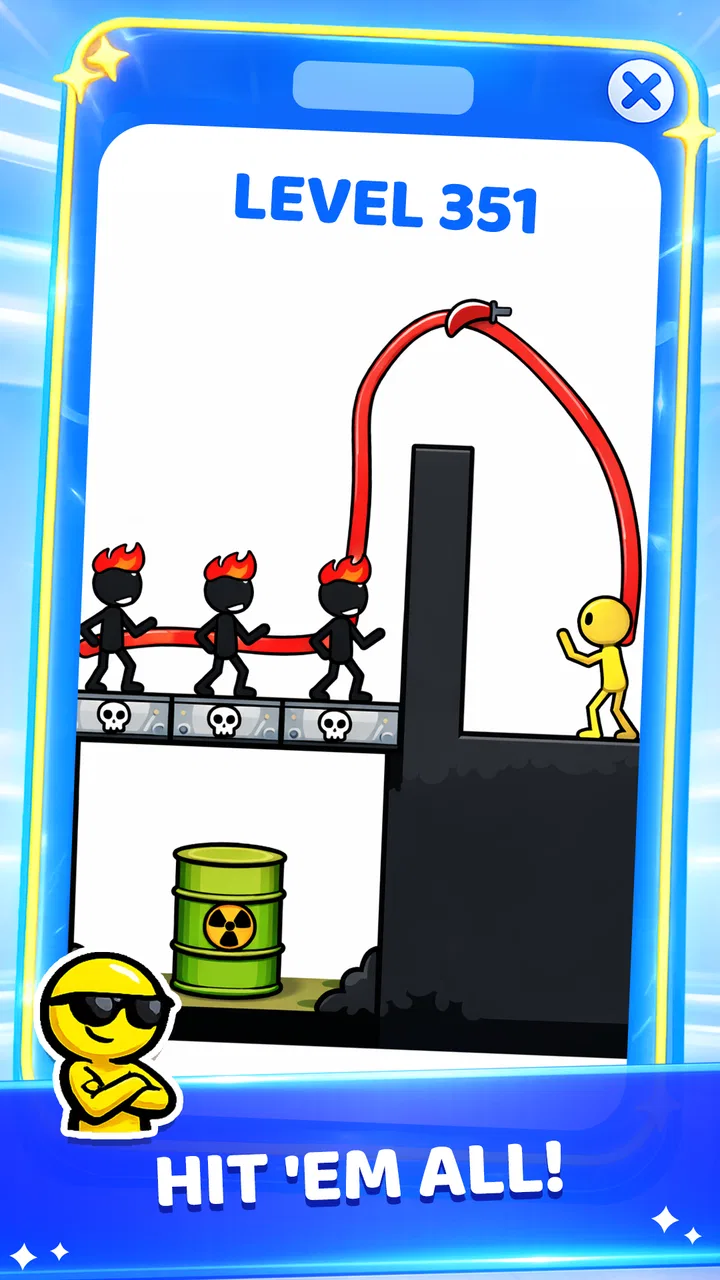
Antistress Games: Calm&Relax
- 4.3
- Rating
- 10.00M
- Installs
- Free
- Price

 Analysis by App-foxy
I opened Antistress Games: Calm&Relax expecting a quick collection of small distractions, and that is exactly where it makes the most sense. This is a free arcade game from Happy Go Game built around short, calming activities rather than one long challenge. I can pick it up when I have a few spare minutes, play without preparing for a serious session, and leave before it starts feeling like homework.
The central appeal is simple: the game turns familiar stress-relief actions into a compact mobile playground. Its store summary presents it as an offline sanctuary for ASMR-style relaxation, while the short description calls it an antistress game. In practice, I found the collection more useful as a flexible pause button than as a game I would play for hours. That distinction matters, because the experience is strongest when I want gentle interaction, not a deep arcade campaign.
How the early goals create a reason to keep tapping
The first goal is not mastery. It is discovering which activities suit my mood. Because the package gathers multiple small experiences, the opening hours feel more like sampling a menu than following a conventional adventure. I can try something soothing, switch when it becomes repetitive, and return later without needing to remember a complicated story or control scheme.
You May Also Like

 Blood Strike: 2.5 Anniversary
Blood Strike’s Loadouts Turn Every Drop Into a Tactical Gamble
A close look at Blood Strike’s custom loadouts: how fast access to signature weapons reshapes its battle royale rhythm, rewards preparation, and narrows the gap between fights.

 Pandora - Music & Podcasts
Pandora’s Music Is Easy to Start, but Harder to Recover
Pandora’s strength is its low-effort path from a seed to a station. Its weak spot is how much confidence it asks you to place in connection, setup, and quiet recovery.

 8 Ball Pool
 Is Built on Rivalries, Rematches, and Routine
A close look at the rivalries, rematches, shared routines, and unanswered safety questions that turn a quick pool match into a persistent mobile community.

 Samsung Music
’s Quiet Strength Is Playing What You Already Own
Its reach comes less from spectacle than from dependable access to a personal library. That simplicity is both the app’s strongest retention engine and its ceiling.

 AccuWeather: Weather Radar
AccuWeather Review: A Quick, Clear Forecast for Everyday Decisions
For everyday plans, the best forecast is the one you can understand quickly. AccuWeather makes rain timing, radar, and local conditions easy to act on, with a few trade-offs.

 Hill Climb Racing
Why Hill Climb Racing Still Turns Crashes Into One More Run
A tiny car, a bumpy hill and one more upgrade: Hill Climb Racing keeps resurfacing because its simple chaos makes every near-miss feel personal.
More From Our News Desk



That low entry barrier is one of its best decisions. I do not need to learn a large control system before relaxing. The early objectives are readable through interaction itself: complete the small action in front of me, notice the response, and decide whether I want another round. For someone using a phone during a commute, a break between tasks, or a few minutes before sleep, this is much more practical than an arcade game that demands concentration from the first screen.
I also like that the game does not make calmness depend on a long uninterrupted session. A short visit can still feel complete. That makes it suitable for people who want a small sensory reset rather than a score-chasing routine. Parents looking for an age-appropriate casual title may also find the Everyone rating reassuring, although the relaxed presentation should not be confused with a substitute for professional help when stress is serious or persistent.
The early experience is less compelling for players who need a strong external objective. If you usually play mobile arcade games for leaderboards, escalating stages, or a dramatic campaign, this collection may feel under-directed. Its first-minute appeal comes from touch and response, not from a powerful narrative question such as what happens next.
What progress feels like when the game is built from small activities
Progress here is best understood through changing activities and personal familiarity rather than a traditional character journey. I notice whether I am getting quicker at recognizing what an activity expects, whether I can settle into its rhythm sooner, and whether a particular interaction works well as a repeatable break. Those are quiet progress signals, but they fit the purpose better than an elaborate upgrade tree would.
This design also changes how I judge replay value. I am not returning only to become stronger. I am returning because a different kind of interaction may fit the moment. After a noisy day, I may want the least demanding option. When I have more patience, I can spend longer exploring the collection. The value comes from matching the activity to my energy level, which is a more personal form of progression than simply filling a bar.
At the same time, this approach has a ceiling. Without a clearly demanding long-term objective, the feeling of advancement can become soft. Once I understand the activities I enjoy, the surprise decreases. That is not necessarily a flaw in a relaxation title, but it means the game has to earn repeat visits through variety and comfort rather than through a powerful achievement chase.
My practical tip is to treat the collection as a set of short routines instead of trying to consume everything in one sitting. I get more from it when I identify two or three activities that help me slow down and use them deliberately. Playing every available interaction back-to-back can turn a calming tool into another stream of screen stimulation.
The difficulty curve is gentle, but that is both its strength and its limit
Antistress Games: Calm&Relax is not designed around the kind of difficulty curve I expect from a precision arcade title. The pressure is intentionally restrained, and that makes the game accessible to people who dislike failure-heavy mobile games. I can experiment without feeling that one mistake has ruined a run, which is exactly what I want when I am already tired or distracted.
The trade-off is that players who need increasing mechanical demand may run out of motivation. A relaxing interaction can be satisfying because it is easy to start, but ease alone does not create a lasting challenge. I would not choose this as my main arcade game if I wanted to test reflexes, optimize routes, or steadily overcome difficult stages.
Its pacing works better when I set my own session length. A few minutes gives the activities room to do their job, while a long session can expose repetition more quickly. I recommend changing activities before the experience becomes automatic. That small habit preserves the sense of discovery and prevents the collection from feeling like one repeated gesture.
Another useful way to approach the difficulty is to separate “challenging” from “engaging.” The game may hold my attention through tactile feedback and novelty even when it is not testing advanced skill. That is a legitimate form of arcade design, but it will not satisfy everyone. If your idea of relaxation is solving a difficult puzzle or improving a high score, a focused puzzle game or traditional arcade title is likely a better match.
How the offline focus changes everyday use
The offline positioning is especially relevant for short, unplanned sessions. I can imagine opening it while waiting for an appointment, sitting on a train with unreliable reception, or taking a break when I do not want to browse social media. That makes the game feel more like a pocket activity box than a service that requires constant attention to an online loop.
For a realistic routine, I would use it after finishing work: put the phone on a quiet surface, choose one low-pressure activity, and stop after a small reset rather than letting the session expand indefinitely. The important benefit is the deliberate interruption. Instead of jumping between messages and feeds, I get a contained interaction with a clear beginning and end.
Offline play also changes expectations. I would not install this for social competition or a constantly changing online world. Its appeal is private and immediate. That is a strong advantage for travel and weak-connectivity situations, but it also means the game must rely on its built-in collection to stay interesting. If you want fresh community content or live events, this is not the type of experience I would prioritize.
Device compatibility is fairly broad: the game runs on Android seven or later, so it remains accessible to many older phones as well as newer models. I still recommend checking how comfortable the controls feel on your particular screen. Small relaxation interactions can feel very different on a compact display compared with a larger phone, and comfort matters more here than raw performance.
Where retention helps and where it can become pressure
The game’s retention strength is its low commitment. I do not have to promise myself a long session, and that makes returning easy. A collection of quick activities can become part of a daily wind-down or a short midday pause because the psychological cost of opening it is small.
There is also a natural retention loop in having several kinds of interaction available. When one activity loses its freshness, another can provide a different rhythm. That variety is more important here than a large numerical progression system would be. The collection gives me a reason to check back based on mood, not only on rewards.
However, free mobile games can create a different kind of pressure through optional purchases. This title is free to install, with in-app items priced from $0.99 to $1.99 each. I would approach those purchases carefully and decide first whether the basic collection already gives me enough relaxation. A low individual price can still become distracting if I start buying simply to remove every small inconvenience or to chase novelty.
My advice is to use the game for several separate sessions before spending anything. That reveals whether the core pacing genuinely fits your routine. If the experience only feels enjoyable when you are considering an add-on, it is probably not offering the right kind of value for you. The free starting point makes that test possible, so I would take advantage of it.
Parents should also remember that an Everyone rating describes the content suitability, not a guarantee that every child will use the game sensibly. If a child is using the title, I would set expectations around screen time and purchases in advance. The calm theme may make it feel harmless, but any free game with optional items deserves the same basic household boundaries as other mobile entertainment.
Who will enjoy it, and who should choose something else
I would recommend this game to people who want a quiet arcade collection, quick offline activities, and a low-stakes way to occupy their hands. It is a particularly good fit for players who find competitive games tiring, who dislike losing progress, or who want something they can leave after a few minutes without feeling unfinished.
It may also work for someone trying to replace reflexively opening social apps. The important difference is that the session has a narrower purpose. I can choose a calming interaction and stop, rather than being pulled through an endless feed. That does not make the game automatically relaxing for everyone, but it gives the break more structure.
I would skip it if you want a deep arcade system, a story with meaningful choices, demanding controls, or a strong sense of long-term achievement. A conventional arcade game will usually offer clearer mastery, while a dedicated meditation app may be better for guided breathing or structured mindfulness. This title sits between those options: it uses play and sensory interaction to create a pause, not formal relaxation instruction.
The developer, Happy Go Game, has positioned the experience around accessibility rather than complexity. Its audience size reflects that broad appeal: it has passed ten million installs and holds a 4.3 average from around thirty-two thousand ratings. Those figures suggest that the simple format connects with many players, although popularity does not remove the central question of fit. I would still judge it by whether its pacing matches the way you personally relax.
My verdict on goals, pacing, and long-term value
After spending time with it, I see Antistress Games: Calm&Relax as a useful small-scale arcade companion rather than a conventional game to conquer. Its strongest design choice is allowing the player to define the session. The early goals are easy to understand, progress is felt through familiarity and activity choice, and the difficulty stays gentle enough for tired hands and unfocused moments.
The same choices create its main weakness. Because the game does not center itself on intense challenge, its long-term pull depends heavily on how much variety you personally find in the collection. Players looking for escalating goals may feel that the pacing settles too soon. I also think the optional purchases deserve restraint, especially because the game’s best use is as a simple, low-pressure break.
The current version is 1.4.9, and the game is free with an Everyone age rating, which makes trying it relatively easy for a broad audience. I would install it when I wanted offline-friendly, bite-sized relaxation with an arcade flavor. I would not install it expecting a substitute for a full arcade campaign, a meditation course, or an endlessly evolving live game.
My final recommendation is straightforward: give it a chance if your ideal mobile session is short, gentle, and easy to abandon. Start without purchasing anything, test it in the exact situations where you usually feel restless, and notice which activities genuinely help you pause. Its success depends less on beating the game than on whether the game helps you leave your screen feeling a little less wound up.
FAQs for Antistress Games: Calm&Relax
01What is Antistress Games: Calm&Relax?
Antistress Games: Calm&Relax is a casual mobile app designed to help users unwind through simple, relaxing activities and mini-games. Instead of focusing on competition, fast progress, or difficult challenges, it offers calming interactions that can be enjoyed during short breaks. The experience is generally suitable for people looking for light entertainment, stress relief, or a quiet way to pass a few minutes.
02How does Antistress Games: Calm&Relax help with relaxation?
The app uses simple gameplay, repetitive interactions, and an easy-to-follow design to create a soothing experience. Activities are usually accessible without complicated instructions, allowing you to play at your own pace. While it cannot replace professional mental-health support or treatment, it may be useful for taking a brief break, redirecting your attention, and relaxing after work, study, travel, or other demanding activities.
03Is Antistress Games: Calm&Relax free to download and use?
The application can generally be downloaded without an upfront purchase, but availability of free content, advertisements, and optional in-app purchases may depend on the version and platform. Before installing, check the Google Play Store or Apple App Store listing for current pricing and subscription details. If the app includes paid features, review the purchase screen carefully so you understand whether a payment is one-time or recurring.
04Can children use Antistress Games: Calm&Relax?
The app’s simple mechanics may be appropriate for many children, but parents should always check the age rating, privacy information, advertising policy, and available in-app purchases before allowing use. Some versions may contain ads or links to other content. It is also a good idea to enable parental controls and supervise younger users, particularly if the device is connected to a payment method.
05Does Antistress Games: Calm&Relax work offline?
Some relaxation activities may remain available without an internet connection once the app has been installed, but this can vary by feature and device. Internet access may still be required for advertisements, analytics, updates, purchases, or loading additional content. If offline use is important to you, test the app in airplane mode after installation and check whether your preferred games continue working as expected.
Pros
- Wide variety of simple games for quick stress-relief sessions.
- Easy controls make the app accessible for most ages.
- Works well for short breaks
- commutes
- or bedtime relaxation.
- Calming sound effects complement the casual gameplay.
- No advanced gaming skills are needed to enjoy the activities.
Cons
- Some activities may feel repetitive after extended use.
- The app may contain ads that interrupt the relaxing experience.
- Several features or games may require in-app purchases.
- Relaxation benefits can vary depending on personal preferences.
- Some sounds or visual effects may not suit users sensitive to stimulation.

Antistress Games: Calm&Relax
Gallery